Integrating Branline: A Strategic Approach to Horror-Style Typography in Professional Workflows
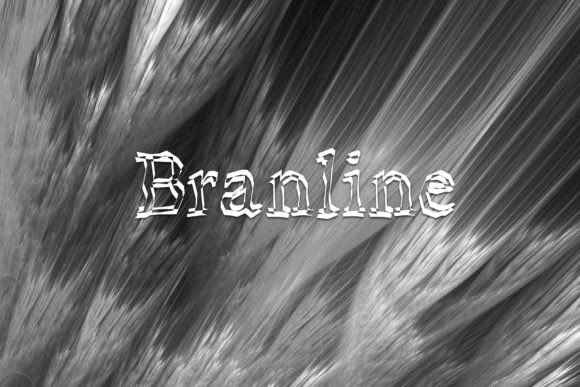
In the landscape of visual communication, typography often serves as the silent ambassador of a brand's personality. While clean sans-serifs dominate corporate reports and elegant serifs grace luxury invitations, there exists a specific niche where distortion, unease, and character are not just acceptable but required. Branline occupies this unique space as a horror-style display font designed to inject immediate atmospheric tension into a project. For professionals ranging from marketing directors to independent game developers, understanding how to integrate such a distinctive typeface is less about aesthetic preference and more about strategic execution. The challenge lies not in finding the font, but in deploying it effectively within a broader creative workflow without compromising readability or brand coherence.
Defining the Role of Distressed Typography in Project Planning
Before opening design software or drafting a layout, the integration of Branline begins during the conceptual planning phase. This font is not a universal solution; it is a specialized tool intended for specific emotional outcomes. When initiating a project—whether it is a Halloween marketing campaign, a thriller novel cover, or a haunted attraction website—the decision to use a horror-style display font must align with the core objective. Planners should ask whether the goal is to evoke fear, curiosity, or a sense of the macabre. If the answer is affirmative, Branline becomes a primary asset rather than an afterthought.
Incorporating this typeface early in the process prevents the common pitfall of "font swapping" late in production, which often leads to layout breaks and inconsistent spacing. By selecting Branline at the outset, designers and content creators can build their grid systems and white space allowances around its irregular metrics. Unlike standard fonts with uniform kerning, horror fonts often feature jagged edges, varying stroke weights, and intentional imperfections that require more breathing room. Acknowledging these structural needs during the initial briefing ensures that the final output maintains high quality control and visual balance.
Workflow Integration Across Different Creative Stages
The utility of Branline extends across various stages of a project lifecycle, interacting differently depending on the medium and the team involved.
Pre-Production and Asset Development
During the pre-production phase, Branline serves as a mood-setting anchor. For video editors and motion graphics artists, using this font in storyboards or animatics helps establish the tonal direction for stakeholders. It provides a tangible reference point for the "feel" of the project before a single frame is rendered. Furthermore, when collaborating with illustrators or 3D modelers, specifying Branline as the titular typeface ensures that surrounding assets are created with compatible textures and lighting. A gritty, distorted font pairs poorly with sleek, vector-based minimalism; knowing this early allows the entire team to source or create assets that harmonize with the typography's rough aesthetic.
Execution and Layout Design
Once the project moves into active design, the focus shifts to usability and legibility. A critical rule when working with display fonts like Branline is restraint. These typefaces are engineered for headlines, logos, and short impact statements, not body copy. Attempting to write paragraphs in a horror-style font creates cognitive friction for the reader, reducing comprehension and increasing bounce rates on digital platforms. In a practical workflow, designers should pair Branline with a highly legible secondary font—such as a neutral sans-serif or a classic serif—for supporting text. This contrast creates a hierarchy that guides the eye: Branline captures attention, while the secondary font delivers the message.
Technical compatibility is another factor to consider during execution. Ensure that the font file format (OTF, TTF, or WOFF) is optimized for the intended platform. For web projects, loading heavy display fonts can impact page speed if not managed correctly. Implementing font-display swap strategies or subsetting the font to include only necessary characters can maintain site performance while preserving the visual impact of Branline.
Post-Production and Quality Assurance
In the final review stage, the evaluation of Branline goes beyond simple aesthetics. Reviewers must check for rendering issues across different devices and resolutions. Horror fonts with intricate details or distressed edges can sometimes appear muddy on low-resolution screens or when printed on certain paper stocks. Conducting rigorous testing on mobile devices, tablets, and print proofs is essential. Additionally, verify that the color contrast meets accessibility standards. While a dark, bloody red might fit the theme, it must still provide sufficient contrast against the background to be readable by users with visual impairments. Adjusting opacity, adding strokes, or modifying background elements may be necessary to meet these standards without sacrificing the intended atmosphere.
Strategic Use Cases and Industry Applications
The application of Branline is versatile when applied with intention. Below are several scenarios where this font adds distinct value to professional workflows:
- Entertainment and Gaming: Indie game developers can use Branline for title screens and in-game signage to immediately signal genre expectations to players. It reduces the need for excessive tutorial text by visually communicating the game's tone.
- Event Marketing: Organizers of seasonal events, such as haunted houses or horror film festivals, can leverage Branline in ticketing systems, social media graphics, and physical signage to create a cohesive brand identity that stands out in a crowded market.
- Publishing: Authors and self-publishers in the thriller or supernatural genres can utilize Branline for book covers and chapter headers. A strong typographic presence on a thumbnail image can significantly improve click-through rates in online bookstores.
- Product Packaging: Niche products, such as craft beers, hot sauces, or limited-edition streetwear, often benefit from edgy packaging. Branline can transform a standard label into a collectible item, appealing to consumers looking for unique, bold aesthetics.
Maintaining Consistency and Long-Term Usability
One of the challenges of using highly stylized fonts is maintaining consistency across a long-term brand evolution. As a business grows, its visual identity may need to adapt. Branline works best as a signature element rather than the sole voice of a brand. To ensure longevity, organizations should document usage guidelines clearly. These guidelines should specify exactly when and where Branline is appropriate, defining minimum sizes, clear space requirements, and approved color palettes. This documentation prevents misuse by future team members or external agencies who might otherwise dilute the brand's impact by overusing the font or pairing it with incompatible elements.
Furthermore, consider the scalability of the design. A logo built with Branline might look striking on a billboard but could lose its defining characteristics when scaled down to a favicon or a social media profile picture. In such cases, having a simplified icon or a monogram derived from the font's shapes ensures the brand remains recognizable even when the full typography cannot be displayed. This forward-thinking approach safeguards the investment in the typeface and ensures it remains a functional asset as the organization expands its digital and physical footprint.
Optimizing the Creative Process with Specialized Tools
Integrating Branline smoothly also involves leveraging the right software tools. Graphic designers using Adobe Illustrator or Photoshop should explore layer styles and blending modes that enhance the font's natural texture. Adding subtle noise, grunge overlays, or displacement maps can amplify the horror effect, making the typography feel integrated into the environment rather than floating on top of it. For web developers, CSS properties like text-shadow and filter can replicate these effects dynamically, allowing for interactive hover states that deepen user engagement without requiring heavy image assets.
Collaboration tools also play a role. When sharing files with clients or team members, always outline fonts or embed them correctly to prevent substitution errors. A missing font can completely break the intended mood of a presentation or mockup. Using cloud-based design platforms that support custom font uploads can streamline this process, ensuring that everyone views the project exactly as intended, regardless of their local system configuration.
Ultimately, the successful deployment of Branline relies on a balance between artistic vision and technical discipline. It is a powerful instrument for storytelling, capable of transforming a mundane layout into an immersive experience. By treating it as a integral component of the workflow—from initial concept to final delivery—professionals can harness its unique potential to create memorable, impactful designs that resonate with their target audience. The key is not just to use the font, but to understand the ecosystem in which it thrives, ensuring that every letter contributes to the larger narrative of the project.