Chalky Chalk: Bringing Authentic Handwritten Charm to Your Digital Designs
In the world of digital design, there is often a struggle to bridge the gap between the sterile perfection of computer-generated text and the warm, organic feel of human handwriting. Designers, educators, and crafters frequently find themselves searching for a typeface that conveys personality without sacrificing readability. This is where Chalky Chalk emerges as a transformative tool. As a cute, fun, and friendly display font inspired by the authentic writing of chalk on a blackboard, it offers a natural touch of roughness that adds immediate beauty and originality to any project. Whether you are creating digital assets or physical goods, understanding how to leverage this specific aesthetic can elevate your work from standard to standout.
The Challenge of Sterile Digital Aesthetics
Many adults involved in content creation face a common hurdle: their designs feel too cold or corporate. When using standard system fonts or overly polished script fonts, the result can lack soul. This is particularly problematic in industries where trust, warmth, and approachability are paramount. For instance, a teacher creating classroom materials needs a font that feels inviting to students, not robotic. Similarly, a small business owner designing a greeting card or a workshop flyer needs to communicate a handmade, caring vibe that mass-market fonts simply cannot replicate.
The goal for these creators is to find a resource that mimics the imperfections of real life. Real chalk writing varies in thickness; it has texture, dust, and a slight unevenness that signals human effort. Replicating this digitally is difficult because most "handwritten" fonts are too uniform. They lack the gritty texture that makes chalk writing recognizable. Without this texture, the design fails to trigger the nostalgic and comforting associations people have with blackboards, classrooms, and casual notes.
How Chalky Chalk Solves the Authenticity Problem
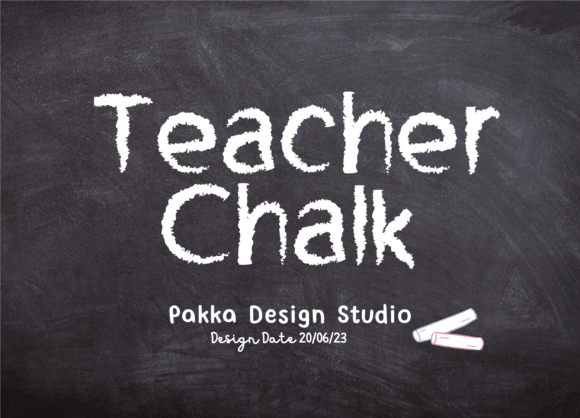
Chalky Chalk addresses these challenges by prioritizing texture and character over geometric perfection. Unlike clean sans-serif fonts, this typeface incorporates a natural touch of rough chalk directly into the letterforms. This means that when you type a sentence, it does not look like it was generated by an algorithm; it looks like it was written by hand with a piece of chalk on a slate surface.
By integrating Chalky Chalk into your workflow, you solve the problem of disconnection. The font acts as a visual shorthand for creativity and informality. It tells the viewer that the content is friendly and accessible. This is crucial for engagement. When an audience sees a familiar, handwritten style, they are more likely to lower their guard and engage with the message. The font's unique ability to balance legibility with artistic flair ensures that your message is read while simultaneously setting a specific emotional tone.
Practical Applications Across Different Industries
The versatility of Chalky Chalk allows it to serve a wide variety of practical needs. Its application extends far beyond simple decoration; it is a functional tool for communication in several key sectors.
- Educational Resources: Teachers and curriculum developers can use this font to create worksheets, bulletin board headers, and presentation slides that feel less like a test and more like a collaborative learning environment. The familiarity of the chalk style helps reduce anxiety for younger learners.
- Digital Design and Branding: For cafes, bakeries, and artisanal shops, Chalky Chalk is ideal for menu boards, social media graphics, and logo variations. It reinforces the brand identity of being fresh, homemade, and community-focused.
- Greeting Card Making: In the realm of papercrafting and digital card design, the font adds a personal touch that printed text usually lacks. It makes birthday wishes, holiday cards, and invitations feel as though the sender personally wrote them.
- Presentation Decks: Corporate presentations often suffer from "death by PowerPoint." Using Chalky Chalk for section dividers or key takeaways can break up the monotony of standard bullet points, keeping the audience engaged and highlighting important information with a creative flair.
Tailoring Usage to Your Specific Goals
Different users will approach Chalky Chalk differently based on their end goals. A graphic designer focused on branding might use the font sparingly, perhaps only for headlines or accent text, to ensure the brand remains professional while still feeling approachable. In this context, pairing Chalky Chalk with a clean, neutral body font creates a sophisticated contrast that guides the reader's eye effectively.
Conversely, a crafter making a scrapbook page or a party invitation might use the font more liberally. Since the medium is inherently personal and decorative, the "rough chalk" texture becomes the star of the show. Here, the focus is on maximizing the emotional impact. The user might experiment with layering the text over textured backgrounds that mimic slate or paper to enhance the realism.
For those in the education sector, the approach is often about clarity. While the font is decorative, it must remain readable for students. Educators might use larger point sizes and high-contrast color combinations—such as white or pastel text on a dark background—to simulate a real blackboard while ensuring every child can read the instructions clearly.
Recommendations for Implementation
To get the most out of Chalky Chalk, consider the context in which it will be viewed. Because it is a display font with texture, it performs best at larger sizes. Using it for long paragraphs of small text might reduce legibility, especially on low-resolution screens. Instead, reserve it for titles, pull quotes, call-to-action buttons, and short labels.
Color choice is also critical. To truly capture the essence of the font, avoid pure black (#000000). Real chalk is rarely pitch black; it is usually off-white, cream, or pastel. Try using hex codes like #F5F5F5 or soft yellows and blues against dark green, navy, or charcoal backgrounds. This enhances the "chalk on blackboard" illusion and prevents the text from looking like a flat digital overlay.
Furthermore, do not be afraid to embrace the imperfections. The value of Chalky Chalk lies in its irregularity. If you try to kern the letters too tightly or align them with rigid geometric precision, you may inadvertently strip away the very charm that makes the font useful. Allow the letters to breathe and maintain a slightly loose layout to preserve the handwritten feel.
Elevating Your Creative Output
Ultimately, adding this lovely typeface to your creations is about taking your designs to the next level by injecting humanity into them. In an era where AI and automation dominate content creation, the human touch is a premium asset. Chalky Chalk provides a simple yet powerful way to reclaim that human element. It transforms ordinary text into a visual experience that resonates with viewers on an emotional level.
Whether you are a professional designer looking to expand your typographic toolkit, a teacher wanting to make learning more engaging, or a hobbyist seeking to add a personal stamp to your crafts, this font offers a reliable solution. It bridges the gap between the digital and the tangible, proving that even in a pixelated world, there is still room for the rough, beautiful imperfection of chalk on a board. By choosing Chalky Chalk, you are not just selecting a font; you are choosing a style of communication that says, "This was made with care."