Evaluating Harben: A Practical Guide to the Wavy Stem Display Font
Typography selection is often the most critical visual decision in a design project, acting as the bridge between raw content and audience perception. Among the vast array of display options available today, Harben has emerged as a distinctive choice for designers seeking a blend of organic fluidity and structural integrity. Defined primarily by its wavy stem characteristics, this typeface offers a unique aesthetic that diverges from the rigid geometry of standard sans-serifs or the traditional curves of classic serifs. For professionals aged 20 to 50 who are currently evaluating resources for branding, packaging, or editorial layouts, understanding the specific nuances of Harben is essential before committing it to a final asset library.
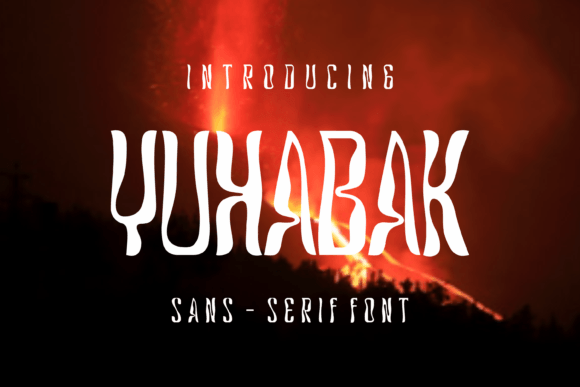
At its core, Harben is a display font, meaning it is optimized for larger sizes such as headlines, logos, and short captions rather than long-form body text. The defining feature—the wavy stem—introduces a subtle undulation to the vertical strokes of the characters. This is not merely a decorative flourish; it injects a sense of movement and hand-crafted warmth into digital or print media. Unlike fonts that rely on extreme contrast or heavy distortion to grab attention, Harben achieves distinctiveness through moderation. The waves are consistent enough to create a recognizable pattern but restrained enough to maintain legibility. This balance makes it an incredible asset for projects that require personality without sacrificing professionalism.
Distinguishing Features and Design Philosophy
When analyzing what makes Harben distinct, one must look at how it handles the tension between stability and flow. Most display fonts in the "organic" category lean heavily into irregularity, mimicking brush strokes or hand-lettering with varying line weights and unpredictable baselines. Harben takes a different approach. It maintains a relatively uniform stroke weight while applying the wave motif systematically. This results in a typeface that feels lively yet grounded.
The wavy stem attribute serves a functional purpose beyond aesthetics. In visual hierarchy, the human eye is drawn to patterns that break monotony. By introducing a gentle curve to vertical lines, Harben creates a rhythmic visual texture that can make a headline feel less static than a standard geometric sans-serif. This is particularly effective in industries where brands wish to appear approachable and modern but not overly casual. For instance, a wellness brand or an artisanal food product might use Harben to convey natural ingredients without resorting to the clichéd "handwritten" script fonts that often lack authority.
Comparative Analysis: Harben vs. Traditional Display Options
To truly evaluate the utility of Harben, it is helpful to compare it against other common categories of display typography. When placed alongside geometric sans-serifs, Harben offers a significant advantage in terms of emotional resonance. Geometric fonts, characterized by perfect circles and straight lines, excel in corporate and tech environments due to their neutrality. However, they can sometimes feel cold or impersonal. Harben provides the clarity of a sans-serif structure but softens the edges with its signature waves, making it a superior choice for lifestyle brands that need to connect on a human level.
Conversely, when compared to script or handwriting fonts, Harben demonstrates superior legibility and versatility. Script fonts are excellent for evoking elegance or personal touch, but they often fail in all-caps settings or when scaled down slightly. They can also be difficult to read for audiences with visual impairments or on low-resolution screens. Harben retains the uppercase clarity of block letters while offering the stylistic flair of a script. This makes it a more robust option for primary logos where the name of the company must be instantly readable across various mediums, from mobile apps to large-format signage.
Another point of comparison is the category of distorted or experimental display fonts. These typefaces often push the boundaries of form to create shock value. While effective for avant-garde music posters or fashion editorials, they rarely translate well to commercial applications where trust and clarity are paramount. Harben occupies a middle ground; it is distinctive enough to stand out in a crowded marketplace but conventional enough in its underlying structure to remain trustworthy. This "safe innovation" is often what decision-makers look for when balancing creative ambition with commercial viability.
Strategic Applications and Best-Fit Scenarios
Identifying the right context for Harben is crucial for maximizing its impact. The font shines brightest in scenarios where the goal is to communicate creativity, fluidity, or natural elements. Below are several practical applications where Harben tends to outperform alternatives:
- Brand Identity and Logos: For startups in the health, beauty, or organic food sectors, Harben's wavy stems subtly reinforce concepts of growth, water, and nature without being literal.
- Packaging Design: On product labels, especially those with minimalistic designs, Harben adds necessary visual interest. The texture of the waves prevents the design from looking too sterile.
- Social Media Graphics: In the fast-scrolling environment of Instagram or TikTok, headlines need to stop the thumb. Harben's unique silhouette catches the eye more effectively than standard system fonts.
- Editorial Headlines: For magazines or blogs focusing on lifestyle, travel, or culture, Harben provides a sophisticated header style that complements high-quality photography.
However, the suitability of Harben is not universal. There are specific situations where its characteristics might become a liability. For example, in highly regulated industries such as finance, law, or medical devices, the preference often leans toward typefaces that exude absolute stability and tradition. In these contexts, the waviness of Harben might be perceived as too informal or unstable. Similarly, for user interfaces (UI) requiring small text sizes, such as navigation menus or data tables, a clean, non-decorated sans-serif is almost always the better technical choice to ensure accessibility and reading speed.
Limitations and Trade-offs to Consider
Every design tool involves trade-offs, and Harben is no exception. The primary limitation lies in its readability at smaller scales. As the point size decreases, the detail of the wavy stems can begin to blur, especially on lower-quality prints or pixel-dense screens. This restricts its use strictly to display purposes. Attempting to use Harben for paragraphs of body text would result in visual fatigue for the reader, as the constant undulation disrupts the horizontal reading flow.
Furthermore, pairing Harben with other typefaces requires a discerning eye. Because it has such a strong personality, it demands a neutral partner. Pairing it with another decorative font would create visual chaos. The most effective strategy is to combine Harben with a simple, highly legible sans-serif or a classic serif for body copy. This contrast allows Harben to serve as the "hero" element while the secondary font handles the heavy lifting of information delivery.
It is also worth noting the potential for overuse. As unique display fonts gain popularity, they risk becoming trendy tropes. If a brand chooses Harben solely because it is currently fashionable, they may find their identity dating quickly. The decision to adopt Harben should be rooted in alignment with brand values—specifically those related to organic movement, approachability, and modern craftsmanship—rather than fleeting design trends.
Making an Informed Decision
Ultimately, adding Harben to your font library is a strategic move if your portfolio frequently intersects with lifestyle, wellness, or creative consumer goods. Its ability to elevate a creation lies in its subtlety; it changes the mood of a design without screaming for attention. For designers and business owners comparing options, the question is not just whether Harben looks good, but whether its specific brand of "organized fluidity" matches the message you intend to send.
If your project requires a font that balances character with clarity, and if you need a display option that feels hand-touched yet digitally precise, Harben represents a compelling solution. However, if your priorities are maximum legibility at small sizes or an aura of strict corporate authority, exploring more traditional geometric or transitional serif alternatives would be the prudent path. By weighing these factors against your specific project requirements, you can determine if the wavy stem aesthetic of Harben is the missing piece in your visual identity puzzle.