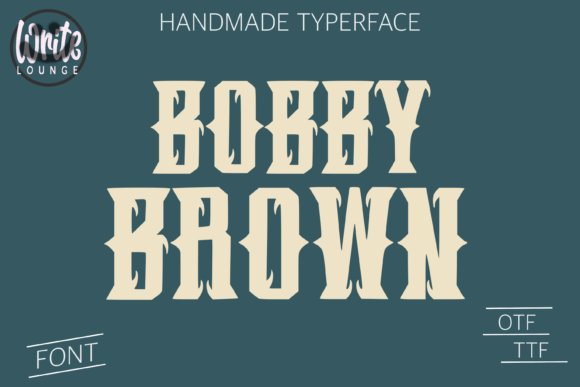
The Timeless Allure of Bobby Brown: A Playfully Nostalgic Serif for Modern Design
In the ever-evolving landscape of digital typography, there is a persistent hunger for fonts that do more than just display text; they evoke a feeling. Designers and creatives are constantly searching for typefaces that bridge the gap between the polished efficiency of modern screens and the warm, tactile memory of printed media. Enter Bobby Brown, a serif font that feels playfully nostalgic while delivering an incredible vintage aesthetic. It is not merely a collection of glyphs but a stylistic vehicle capable of transporting viewers to a simpler, more whimsical era without sacrificing readability or contemporary relevance.
The charm of Bobby Brown lies in its unique ability to balance eccentricity with structure. Unlike rigid geometric sans-serifs that dominate corporate branding, or ultra-traditional serifs that can feel stuffy and outdated, this typeface occupies a sweet spot. It whispers of old storybooks, hand-lettered signage from mid-century boutiques, and the ink-stained pages of independent zines. When you apply Bobby Brown to a project, you are not just choosing a font; you are selecting a mood. It invites the viewer to slow down, to appreciate the curves and the slight irregularities that mimic the human hand, creating an immediate emotional connection.
Defining the Vintage Aesthetic Through Character
To understand why Bobby Brown has become a favorite among designers seeking a retro touch, one must look closely at its anatomical features. The font possesses distinct high-contrast strokes, where thick vertical lines meet delicate, hairline horizontals. This contrast is reminiscent of Didone typefaces from the 19th century but softened with a playful bounce that prevents it from feeling too severe. The serifs themselves are often bracketed with a gentle curve, avoiding sharp, aggressive angles that might distract the eye.
Furthermore, the x-height of Bobby Brown is generous, ensuring that lowercase letters remain legible even at smaller sizes. This is a crucial functional characteristic for a font that leans heavily into style. Many vintage-inspired fonts sacrifice usability for aesthetics, becoming illegible when scaled down for body text or mobile interfaces. However, Bobby Brown maintains clarity, making it versatile enough for both headlines and shorter paragraphs. The open counters—the enclosed spaces within letters like 'o', 'e', and 'a'—allow air to flow through the text, preventing the dense, heavy look that often plagues retro designs.
What truly sets this typeface apart is its "playful" nature. Certain characters feature subtle swashes or alternative glyphs that break the monotony of standard typing. For instance, the capital 'Q' might have an exaggerated tail, or the ampersand could twist in a way that feels almost handwritten. These details are what give Bobby Brown its soul. They remind us that before computers standardized every pixel, typography was an art form filled with individual expression. Using this font allows modern creators to inject that same spirit of individuality into their digital workflows.
Integrating Retro Charm into Modern Workflows
The application of Bobby Brown extends far beyond simple decoration. In today's design ecosystem, where brands strive to appear authentic and human-centric, this serif font serves as a powerful tool for storytelling. Consider the booming industry of artisanal food and beverage. A craft coffee roaster or a small-batch bakery needs packaging that communicates quality, tradition, and care. Slapping a generic sans-serif on a bag of beans feels impersonal. Instead, using Bobby Brown on the label instantly suggests a heritage brand, even if the company was founded last year. It creates a narrative of longevity and craftsmanship.
Similarly, in the realm of digital publishing and blogging, there is a resurgence of long-form content that prioritizes reading comfort. Websites dedicated to travel, literature, and lifestyle are moving away from stark, minimalist layouts toward designs that feel more like magazines. Here, Bobby Brown shines as a heading font. Pairing it with a clean, neutral sans-serif for body copy creates a dynamic hierarchy that guides the reader's eye while maintaining a sophisticated, editorial look. The juxtaposition highlights the personality of the serif without overwhelming the user experience.
Fashion and beauty industries also leverage the specific vibe of Bobby Brown to great effect. Brands aiming for a "cool girl" aesthetic or a throwback to the 70s and 80s utilize this font to convey confidence and style. It works exceptionally well in lookbooks, social media graphics, and campaign posters. The font's inherent elegance allows it to sit comfortably alongside high-resolution photography, adding a layer of typographic interest that complements rather than competes with the visuals. When a designer chooses Bobby Brown, they are making a statement about the brand's identity: one that values history, artistry, and a touch of whimsy.
Practical Considerations for Adoption
While the aesthetic benefits of Bobby Brown are clear, practical considerations must guide its implementation. One of the primary factors designers evaluate is licensing and availability. As with any premium typeface, ensuring you have the correct license for web use, print, or commercial applications is essential. Many foundries offer varying tiers of licensing, and understanding these terms prevents legal headaches down the road. Additionally, checking the character set is vital. Does Bobby Brown support multiple languages? Does it include the specific punctuation or symbols your project requires? A font might look beautiful, but if it lacks the necessary glyphs for your target audience, its utility diminishes significantly.
Another critical aspect is pairing. While Bobby Brown is stunning on its own, it rarely works in isolation for complex layouts. The key to a successful design is harmony. Because this serif has such a strong personality, it pairs best with understated companions. A geometric sans-serif with low contrast often provides the perfect counterbalance, allowing the vintage flair of Bobby Brown to take center stage without creating visual chaos. Designers should experiment with weight and scale; perhaps using the bold variant of Bobby Brown for massive headers while keeping the regular weight for subheads creates a rhythm that feels both structured and organic.
Accessibility remains a non-negotiable priority in modern design. Despite its decorative qualities, Bobby Brown must meet contrast ratios and size requirements to ensure inclusivity. When used for body text, it is advisable to increase the line height (leading) slightly to accommodate the unique shapes of the letters. Testing the font on various devices—from large desktop monitors to small smartphone screens—is essential to verify that the delicate serifs do not disappear or blur on lower-resolution displays. If the fine details get lost, it may be better to reserve Bobby Brown for larger display purposes where its intricacies can be fully appreciated.
Scenarios Where Bobby Brown Excels
Imagine a wedding invitation suite. The couple wants a theme that feels romantic yet not overly traditional. They want to avoid the cliché script fonts that dominate the wedding industry. Here, Bobby Brown offers a fresh alternative. Its serif structure commands respect and formality, while its playful nuances suggest a celebration full of joy and personality. Printed on textured cardstock, the ink settles into the paper, enhancing the vintage aesthetic and creating a tangible keepsake that guests will cherish.
Consider also a podcast cover art design. In a sea of bold, blocky titles, a show about history, folklore, or storytelling could stand out by utilizing Bobby Brown. The font immediately signals to the potential listener that the content is narrative-driven and perhaps a bit nostalgic. It sets an expectation of tone before a single episode is played. Similarly, for a boutique hotel rebranding, using this font on signage, menus, and key cards can transform the guest experience, making the space feel curated and steeped in character rather than generic and corporate.
Ultimately, the decision to adopt Bobby Brown comes down to the story you wish to tell. It is a font for those who believe that design should have a heartbeat. It rejects the sterile perfection of algorithmic generation in favor of something that feels touched by human hands. Whether you are designing a logo, laying out a magazine, or crafting a social media campaign, this typeface offers a bridge to the past that feels entirely relevant to the present. By integrating Bobby Brown into your creative toolkit, you unlock the ability to create work that is not only seen but felt, resonating with audiences on a deeper, more emotional level.
The versatility of Bobby Brown ensures it remains a staple for designers who value both form and function. It proves that looking back does not mean moving backward; instead, it allows us to carry the best elements of design history forward into our modern projects. As trends continue to cycle and evolve, the demand for authenticity will only grow, and fonts like Bobby Brown will remain essential for anyone looking to add that special retro touch to their next big idea.