Crazyhead: Embracing Bold Typography for Modern Design
In the vast landscape of digital and print design, typography often serves as the silent ambassador of a brand's voice. While many designers rely on safe, conventional sans-serif fonts to ensure readability, there is a growing demand for typefaces that break the mold and inject personality into every letter. Enter Crazyhead, a wild-looking display typeface that challenges traditional norms with its high contrasting strokes and distinctive character. This font is not merely a tool for writing; it is a statement piece designed to capture attention and evoke emotion.
The journey of selecting the right font can be daunting, especially when balancing aesthetic appeal with functional legibility. Crazyhead offers a unique solution to this dilemma. By departing from what is conventional, it steps into a realm where boldness breathes freely. Its inverted contrast structure—where the thick and thin parts of the letters are swapped compared to traditional serif fonts—creates a visual rhythm that is both surprising and harmonious. This article explores the intricacies of Crazyhead, examining its features, ideal applications, and the value it brings to creators across various industries.
The Anatomy of a Wild Typeface
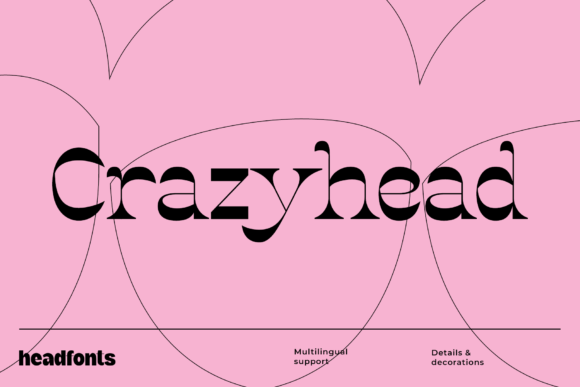
To truly appreciate Crazyhead, one must look closely at its structural elements. The font is defined by its exaggerated serifs and beautiful curves, which work in tandem to create a sense of movement. Unlike static block letters, Crazyhead feels alive, as if each character has been drawn with a fluid, energetic hand. The high contrasting strokes are the hallmark of its design; these sharp transitions between thick and thin lines add a layer of sophistication that prevents the "wild" nature of the font from becoming chaotic.
The term "inverted contrast" is crucial here. In classical typography, vertical strokes are typically thick while horizontal strokes are thin. Crazyhead flips this script, creating an optical illusion that draws the eye inward. This technique not only distinguishes it from standard offerings but also retains the legibility necessary for its purpose. Despite its flamboyant appearance, the characters remain distinct and readable, ensuring that the message is never lost in the style.
Key Characteristics
- Inverted Contrast: A reversal of traditional stroke weights that creates a unique visual identity.
- Exaggerated Serifs: Bold extensions that add drama and flair to each glyph.
- Fluid Curves: Smooth, organic lines that soften the aggressive edges of the high-contrast strokes.
- Distinctive Personality: A vibe that screams confidence, creativity, and non-conformity.
- Retained Legibility: Careful spacing and proportioning ensure text remains readable even at smaller sizes.
Ideal Applications and Use Cases
Choosing a display font like Crazyhead requires a strategic approach. Because of its strong personality, it is not suitable for every context. However, for specific niches, it is unparalleled. The font shines brightest in urban, vintage, and fashion-related designs. Imagine a streetwear brand launching a new collection; the jagged yet elegant lines of Crazyhead on a poster or t-shirt immediately communicate a sense of edgy modernity mixed with retro cool.
In the fashion industry, where visuals dictate trends, Crazyhead provides the perfect typographic voice for lookbooks, magazine covers, and runway invitations. Its ability to blend high-contrast elegance with a raw, untamed feel mirrors the often contradictory nature of fashion itself. Similarly, for vintage-themed projects, such as retro diner signage or old-school music festival flyers, the font's exaggerated serifs evoke a sense of nostalgia while feeling fresh and contemporary.
Beyond large-scale graphics, Crazyhead possesses a surprising versatility. It can be effectively used for small articles or occasional text within a larger layout. For instance, a blog post about urban exploration might use Crazyhead for pull quotes or subheadings to break up the monotony of standard body text. This usage adds visual interest without overwhelming the reader, provided it is used sparingly and with intention.
Real-World Scenarios
- Brand Identity for a Coffee Shop: A local roaster wanting to emphasize its artisanal, slightly rebellious spirit could use Crazyhead for its logo and menu headers, setting it apart from competitors using generic scripts.
- Music Album Covers: Indie rock or jazz fusion albums often require artwork that suggests complexity and depth. The intricate curves of Crazyhead can mirror the layers of sound in the music.
- Fashion Editorials: High-contrast photography paired with Crazyhead headlines creates a dynamic interplay between image and text, enhancing the overall impact of the spread.
- Event Posters: Whether for a night market or an art gallery opening, the font's bold presence ensures the event details stand out on crowded bulletin boards or social media feeds.
Evaluating Suitability for Your Project
Before integrating Crazyhead into a design project, it is essential to evaluate whether it aligns with the project's goals and audience. While the font is undeniably striking, its intense personality means it can clash with overly corporate or minimalist aesthetics that demand neutrality. If the goal is to convey trust, stability, and tradition in a conservative sector like banking or healthcare, Crazyhead might be too disruptive.
However, for creators looking to disrupt the status quo, it is an invaluable asset. When evaluating suitability, consider the following questions:
- Does the brand voice allow for experimentation and boldness?
- Will the font be used primarily for headlines, or does it need to support long-form reading?
- How does the font interact with the accompanying imagery and color palette?
- Is the target audience receptive to unconventional design choices?
If the answer to these questions leans toward creativity and expression, then Crazyhead is likely a perfect fit. It is important to remember that great design is about balance. Pairing Crazyhead with a clean, simple sans-serif for body text can create a harmonious hierarchy that allows the display font to shine without causing visual fatigue.
Strengths and Considerations
The primary strength of Crazyhead lies in its ability to command attention. In a digital world saturated with content, standing out is half the battle. The font's unique structure ensures that anything written in it is instantly recognizable. Furthermore, its retention of legibility despite its wild appearance is a testament to thoughtful type design. Many display fonts sacrifice readability for style, but Crazyhead manages to offer both, making it practical for a wider range of applications than typical novelty fonts.
Nevertheless, there are limitations to consider. The high contrast and intricate details of the font may not render well at very small sizes on low-resolution screens. Designers should test the font across various devices to ensure the fine lines do not disappear or blur. Additionally, because of its strong stylistic presence, it should not be overused. Using Crazyhead for entire paragraphs of body text can be exhausting for the reader; it is best reserved for moments that require emphasis and impact.
Conclusion: Go Wild with Purpose
Typography is more than just arranging letters; it is about crafting an experience. Crazyhead invites designers and business owners to step away from the safety of convention and explore the expressive potential of language. With its inverted contrast, exaggerated serifs, and beautiful curves, it offers a distinctive personality that can elevate any urban, vintage, or fashion-related project.
Whether you are designing a flagship store sign, a limited-edition apparel line, or a creative blog header, Crazyhead provides the tools to make your message resonate. It encourages us to embrace the wild side of design while maintaining the clarity needed to communicate effectively. For those ready to infuse their work with energy and character, getting Crazyhead today is the first step toward going wild with purpose. Let your designs breathe freely and leave a lasting impression on your audience.